FCRF
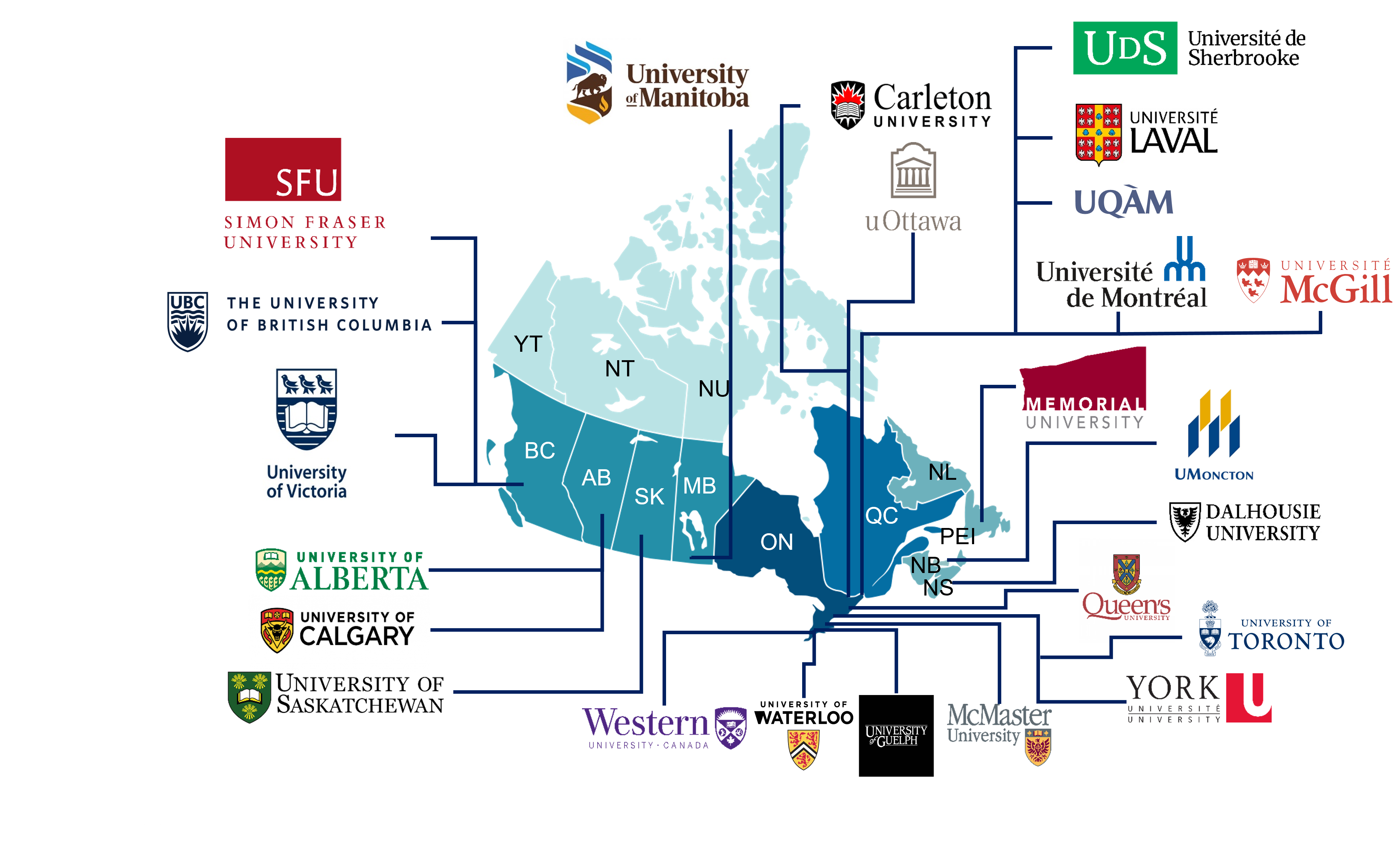
In twenty years, the FCRF has financed over 400 collaborative research projects. The FCRF is currently made up of 24 member universities and supports around 20 new projects each year. These projects are led by French and Canadian teams collaborating for the first time.
Laureates are awarded start-up grants of CA$8,000 to $15,000 to fund research and student mobility between the two countries.
How to apply
- The FCRF is open to all fields of research.
Applications must be for joint projects between a French institution (all universities, grandes écoles, research institutes and organizations are eligible) and one of the 24 Canadian universities that are members of the FCRF. - The FCRF only funds new collaborations, and researchers who apply must never have worked together before (please refer to the FAQ and the FCRF guide for more information). It is essential that researchers include students and young researchers in their work teams.
- An annually updated FCRF guide is made available to researchers when the call for applications opens.
- Member universities may submit up to five applications. Pre-selected applications are evaluated in a second phase by committees of French and Canadian experts. The FCRF Executive Committee then decides on the final allocation of grants at its annual meeting.
FCRF Calls for application
OUR PARTNERS
• MINISTÈRE FRANÇAIS DE L’ENSEIGNEMENT SUPÉRIEUR ET DE LA RECHERCHE (MESR)
FCRF historical partner, the MESR offers each year two 3-year doctoral fellowship. They are granted to two French doctoral schools and awarded to the best projects selected by the ministry.
• MITACS
Mitacsis a Canadian federal agency designing and implementing research and training programs for 20 years around all Canada. It works with a vast network of 70 universities, federal agencies, and thousands of companies. Mitacs has supported FCRF for years by granting each laureate a $6,000 Globalink Reasearch Award (GRA) for one of the students (French or Canadian) working in the project. This grant covers mobility expenses for a research trip from 12 to 24 weeks in the French/Canadian partner institution.
• L’ORÉAL CANADA
L’Oréal Canada is a partnership with UNESCO which has supported for years the participation and contribution of women to scientific progress through its « For women in science » program.
FCRF and L’Oréal Canada started their partnership to support participation of women to France / Canada scientific cooperation project in 2013 withthe “L’Oréal / FCRF” grant:
Two young Canadian PhD students are rewarded for their work within a France-Canada project.
FAQ
Can post-docs apply?
No, only researchers holding a tenured or tenure-track position are eligible to apply.
What is a “young researcher”?
This refers to master’s and doctoral students. Post-doctoral fellows may be considered as young researchers, provided their teams also include students.
What is a “new collaboration”?
Researchers wishing to apply must never have worked together before. For example, co-publication, joint organization of conferences or joint supervision of students are considered collaborations. The researchers concerned are not eligible.
What expenses are eligible in the budget?
FCRF funds are primarily intended to finance the mobility of researchers, including young researchers. As such, travel expenses such as flights, accommodation and meals are eligible. Costs should be balanced to give students a chance to travel too.
University overheads and salaries are not eligible.
What can be included in the “other” category of the budget?
The cost of equipment or materials required for the project, for example, are eligible. However, we recommend that you do not include more than 10% of the total budget in the “other” category.