
DELF/DALF exams
What are the DELF and DALF exams?
Assess and certify your French language proficiency with the diplôme d’études en langue française (“Certificate of French Language Studies”), or “DELF” (beginner and intermediate French proficiency), and the diplôme approfondi de langue française (Advanced Certificate of French Language Proficiency), or “DALF” (advanced French proficiency).
The DELF and DALF are 6 separate diplomas that are valid for life and issued by the French Ministry for National Education to certify the language proficiency of people whose mother tongue is not French. They are designed by France Éducation international (FEi) and are aligned with the 6 levels of the Common European Framework of Reference for Languages (CEFR).
CEFR Level | DELF/DALF Exam | Level of Proficiency |
|---|---|---|
C2 | DALF C2 | Advanced |
C1 | DALF C1 | |
B2 | DELF B2 | Intermediate |
B1 | DELF B1 | |
A2 | DELF A2 | Beginner |
A1 | DELF A1 |
The DELF and DALF exams assess the 4 language competencies:
- Reading
- Writing
- Speaking
- Listening comprehension
DELF and DALF exams in Canada
- In Canada, more than 84,000 Canadians have taken the tests in recent years.
- There are 35 test centers across the country.

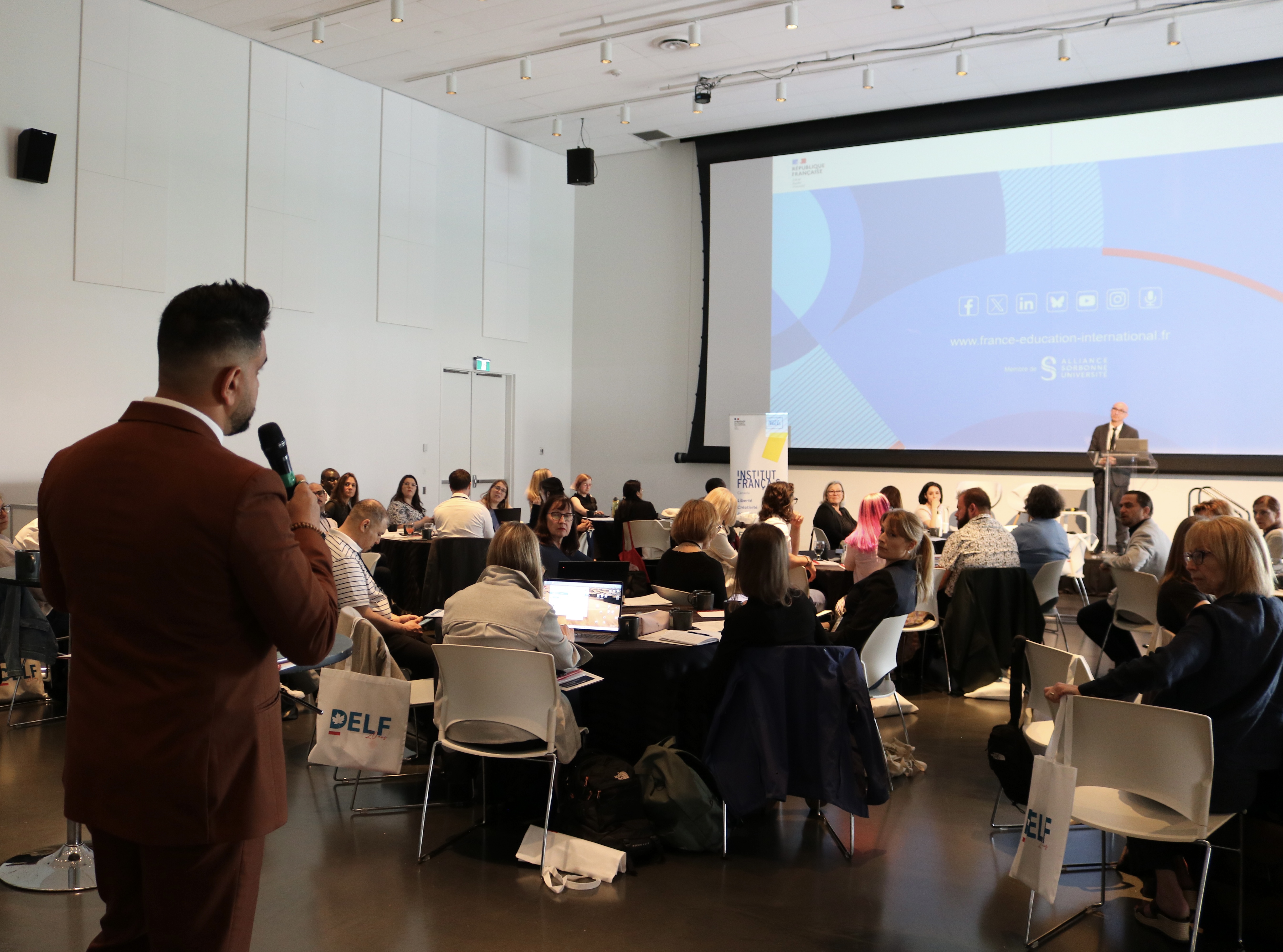
The DELF and DALF celebrate 20 years in Canada!
Since its introduction on November 1, 2005, the program has become a benchmark tool for recognizing proficiency in French as a second language and foreign language among pupils, students, teachers, and institutions.
News from DELF/DALF Canada
Read more about itWhy take a DELF/DALF exam?
The DELF and DALF diplomas are internationally recognized, and their respective exams have been approved by a team of psychometricians who are experts in assessment. The exams are frequently used around the world by government agencies, employers, and educational institutions, and a DELF/DALF diploma is an asset to a résumé.
In Canada, the DELF and DALF are also becoming increasingly well-known and recognized by government agencies, employers, and educational institutions.
Passing the DALF facilitates access to French universities, as well as a growing number of other European and Francophone universities. Passing the DELF B2 exempts students from language entrance exams at all French universities.
Which DELF/DALF exam should I sit?
The DELF is an official diploma issued by the French Ministry for National Education to certify the French proficiency of foreign or non-Francophone candidates.
There are various versions that are adapted to different candidate profiles:
DELF Prim: Geared to children aged 7 to 12, this version of the exam uses simple and fun subjects that are a part of a child’s everyday life.
DELF Junior/Scolaire: Designed for youth aged 12 to 17, this version of the exam touches on subjects that are adapted to their interests while respecting the DELF’s structure and requirements.
DELF Tout Public: Designed for adults (or youth aged 16+), students and professionals, this version of the exam is adapted to the widest clientele and covers a range of subjects.
Each version of the exam assesses the same competencies (reading, writing, speaking and listening comprehension), but the content is adapted to the age, interests and needs of the various candidate profiles.
DELF DALF Tout public (for the general public)
Target profile:
Adults and young adults. The DELF Tout Public is a general-purpose diploma that meets most of the needs of adults.
Proficiency level and competencies assessed:
A1 to B2 – Written and oral comprehension and expression.
For more information, visit DELF.
Target profile:
Advanced learners
Proficiency level and competencies assessed:
C1 and C2 – Written and oral comprehension and expression.
For more information, visit DALF.
Target profile:
High school students
Proficiency level and competencies assessed:
A1 to B2 – Written and oral comprehension and expression.
The exams are adapted to the age and interests of high school students (aged 12 to 18).
The DELF Junior is designed for teenagers who wish to have their French language proficiency certified outside of an academic context by an internationally recognized diploma. Students can register individually at any certified exam centre.
The DELF Scolaire and DELF Junior exams are identical. The only difference is the context in which the exams are taken.
For more information, visit France Éducation international’s DELF Scolaire and Junior webpage.
Target profile:
High school students
Proficiency level and competencies assessed:
A1 to B2 – Written and oral comprehension and expression.
The exams are adapted to the age and interests of high school students (aged 12 to 18).
The DELF Scolaire is the result of an agreement between a private or public educational authority and France Éducation international. It can be integrated into the school curriculum in a variety of ways.
The DELF Scolaire and DELF Junior exams are identical. The only difference is the context in which the exams are taken.
For more information, visit France Éducation international’s DELF Scolaire and Junior webpage.
Target profile:
Primary school students.
Proficiency level and competencies assessed:
A1.1, A1, A2 – Written and oral comprehension and expression.
The oral and written exams are adapted to the age and interests of elementary school students (up the the age of 12, in Canada).
For more information, visit DELF Prim.
How to register?
The DELF-DALF exam schedule is national, established on an annual basis and aligned with the calendar year. For specific registration details (dates, fees, required documents), it is recommended that you contact your nearest exam centre directly.
Exam centres in Canada
Alberta
- Alliance Française de Calgary
- Alliance Française d’Edmonton
- Calgary Board of Education
- Calgary Catholic School District
- Dept. of Modern languages, University of Lethbridge
- École de langues, Campus St. Jean, Université de l'Alberta
- Grande Prairie : Centre de ressources de langue française
- West Island College
British Columbia
- Alliance française de Vancouver
- Centre DELF de Colombie Britannique
- Centre d'examen DELF DALF de l'Université Simon Fraser (SFU)
- Centre DELF DALF University of Victoria
Manitoba
Ontario
- Alliance française de Toronto
- Alliance française d’Ottawa
- Centre DELF de l'Ontario
- Centre DELF-DALF du Nord-Ouest de l’Ontario
- Hillfield Strathallan College (HSC)
- Ottawa - Carleton District School Board
- The Education Academy
Prince Edward Island
Québec
- Alliance Française de Montréal
- Collège de Sainte-Anne-de-la-Pocatière
- Commission Scolaire Lester B. Pearson
- Kuper Academy High School
New Brunswick
Newfoundland and Labrador
Northwest Territories
Nova Scotia
Saskatchewan
DELF-DALF training and certification courses
The DELF-DALF central administration in Canada regularly organizes certification courses to train teachers to become examiners and markers for DELF and DALF exams, from level A1.1 to level C2, and for all versions (Prim, Junior/Scolaire, Tout Public).
In addition, thematic training courses are also offered, notably on:
- the implementation of the Common European Framework of Reference for Languages (CEFR) in teaching and assessment practices;
- the management of an examination center, including organizational, logistical, and regulatory aspects.
These training courses are intended for teachers, trainers, school administrators, and future center managers involved in promoting and implementing the DELF and DALF in Canada.
For more information, contact: delfdalf@institutfrancais.ca